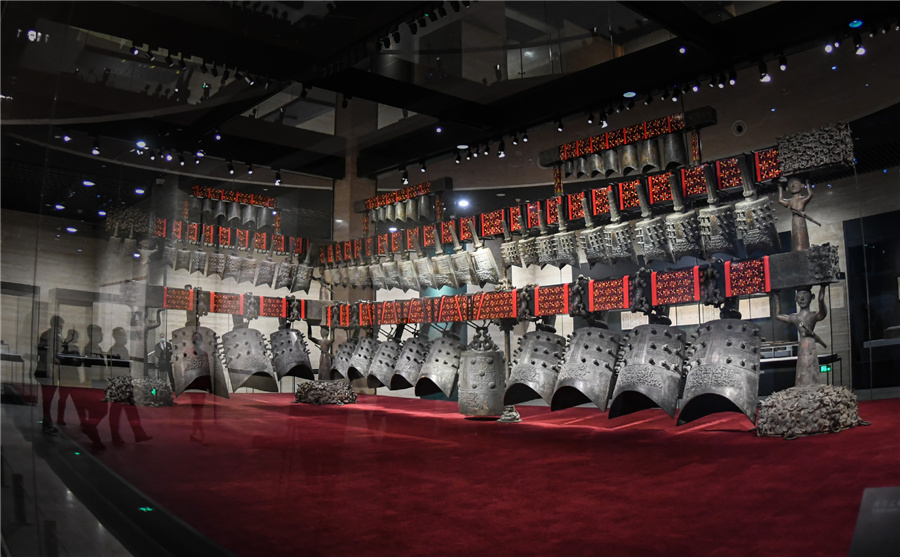
Tomb of Marquis Yi of Zeng
Introduction
The Tomb of Marquis Yi of Zeng is an archaeological site located in Suizhou, Hubei province. This tomb, which dates back to the Warring States Period (475-221 BC), is renowned for its extraordinary discoveries, particularly the set of 65 bronze bells known as the Bianzhong. Unearthed in 1978, the tomb has provided significant insights into ancient Chinese civilization, music and craftsmanship.
Discovery and Excavation
The tomb was discovered accidentally in 1978 during construction work in Suizhou. Archaeological excavations revealed it to be the final resting place of Marquis Yi, a ruler of the minor state of Zeng. The tomb's layout and the artifacts found within it illustrate the wealth and cultural sophistication of the period. Among the most remarkable findings was the set of bronze bells, which are considered one of China's greatest archaeological treasures.
The Bronze Bell Set
The 65-piece bronze bell set, unearthed from the tomb, is a significant testament to ancient Chinese musical achievement. Known as Bianzhong, these bells are sophisticated musical instruments that produce a range of sounds. Each bell in the set can produce two distinct musical notes, and collectively they cover a range of five octaves, forming a complete 12-tone scale. This technological and artistic accomplishment reflects the advanced metallurgical and musical knowledge of the time. The bells are currently housed in the Hubei Provincial Museum and are regarded as the museum's most precious treasures.
Cultural and Artistic Impact
The Bianzhong set from the Tomb of Marquis Yi of Zeng is considered a pinnacle in the development of Chinese musical instruments before the Qin Dynasty (221-206 BC). The bells were used in court music to provide ceremonial and ritualistic functions, underscoring the importance of music in ancient Chinese society. The intricate design and craftsmanship of the bells indicate the high level of artistry and cultural significance attributed to music by the nobility.
The discovery of the Tomb of Marquis Yi and its contents has had a profound impact on the understanding of ancient Chinese culture and arts. The zun vessel and saucer found in the tomb are masterpieces of bronze craftsmanship from the Shang and Zhou dynasties (c.16th century-256 BC). The vessel's rim features openwork decorations of intertwined dragons and snakes, and its body is adorned with chi dragon patterns in relief. These artifacts highlight the sophisticated artistic expressions and technical skills of ancient craftsmen.
Modern Revival and Influence
German composer Robert Zollitsch, also known as "Lao Luo", has played a significant role in reviving interest in the Bianzhong. Inspired by the unique sounds of the bells, Zollitsch has undertaken a project to integrate them into contemporary compositions. His works aim to bring the ancient instrument to modern audiences, ensuring its sounds are not confined to museums but continue to resonate in vibrant performances. Zollitsch's initiatives include composing music, staging performances and training ensembles to use the Bianzhong, thereby linking ancient traditions with modern creativity.
Gong Lina, a renowned Chinese folk singer, has been instrumental in promoting the Bianzhong through her performances. Collaborating with Zollitsch, she has brought new life to traditional Chinese music by infusing it with contemporary elements. Gong's performances often feature the Bianzhong, creating an evocative connection between past and present and captivating audiences with the timeless beauty of ancient Chinese music.








